My Secret Life as a Spaghetti Coder
home | about | contact | privacy statement | getting started with cfrails
Chad Fowler describes the problem:
What I've noticed since coming back from India is that in America we are so focused on ourselves that we don't even take the time to learn about our teammates from other parts of the United States. What's the special food in Minnesota? What do Arizonans do on the weekends in their nonexistent winters? The United States is a diverse place, and we don't even bother to learn about our own diverse culture, much less the cultures of people on the outside.
I don't want to get into the merits of whether or not Americans are inward-looking and selfish. The important part here is that as the world becomes smaller, nation-states are losing importance as cultural and political boundaries, and we're increasingly exposed (and exposing ourselves to) new people from unfamiliar places. We can choose to embrace this, or fight it.
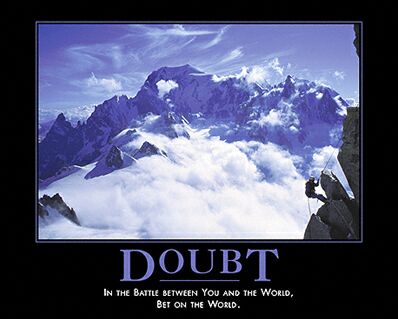
In the battle between you and the world, bet on the world.

It's pointless to fight it. You can try to change the world. Or, you could think of changing yourself. Luckily, it's fairly easy to turn this to your advantage: just show people that you care about them as humans, not just colleagues.
If I have to depend on someone to get something done for me or to deliver a piece of software that I have to successfully integrate with, I'm going to have much better luck if that person feels I respect them and if they respect me. Would you respect someone who wouldn't even bother to learn how to pronounce your name?
...
If you show your teammates that you are interested in them as people, you will form tighter bonds and, on the whole, do better work.
On the contrary, you could be an ass - perhaps without even realizing it:
As I got to know our team members in India, I often heard them say that I wasn't like the typical American manager. When I asked what they meant, those who felt comfortable enough would say, You actually take an interest in us. Most of you are just angry and short with us.
I had a fellow student at school say the same thing to me. He asked, "Are you natively American?" It was eye opening to think that he had been treated so poorly by other Americans that he had to ask me if I am one (I am.)

Incidentally, this is a tactic in getting anyone to like you generally, so if you have friends, you don't need to learn any new skills. In this case, it may be even easier because you know tons of things exist that you don't know about them: just pick a couple and ask about them. All Chad had to do was say "Hello, my name is Chad" in their native language. It's about making a small effort, that's all.

Meta
This week marks the end of the Save Your Job series, at least as far as following each chapter of Chad Fowler's book, My Job Went To India. Why? Well, because it's the last one in the book. I'll still post to that category as things come up, but it's not likely to be weekly.

This is a book that, in my opinion, is a must-read for software developers, and it's so short you can read it multiple times - to remind yourself as you slip back into old habits, or to reinvigorate interest in goals you set for yourself in times past.

In any case, I hope you've enjoyed the weekly series, and more than anything else, I hope you got something useful from it. It was useful to me!

While I thoroughly enjoyed Chad's book, I must say I'm glad to be done with the series. I've been wanting to free up some time to do some more technical things, like playing with my new Arduino Diecimila.

Keep watching.

Hey! Why don't you make your life easier and subscribe to the full post or short blurb RSS feed? I'm so confident you'll love my smelly pasta plate wisdom that I'm offering a no-strings-attached, lifetime money back guarantee!


Comments
Leave a comment

Hey thanks Sammy. :) In my case it may be a good book to read for more than the reasons described by yourself and the author. You may have seen me mention before that I've discovered just in the past couple of years that I'm autistic. Well anyone who knows me can attest that I'm a nice guy and that I'm genuinely trying to be helpful and make the world a little better place.

The problem is that few people really know me. And that's part of the problem of autism in general - part of my challenge. For people who don't get much exposure to autistics (or to me specifically) it's likely easy to assume that I'm just an egotistical jerk. It's certainly not my intent though.

Social cues like inflection, facial expressions, body language and careful word-selection are often not noticed and even when they are noticed they're often misinterpreted. Of course everyone misinterprets - but the margin of error for an autistic person is much wider than for others.

Anyway ... again, I'm not trying to make this all about me. :) But I'm always on the lookout for ways to improve my poor social skills, like the suggestions here... and as you pointed out, "if you have friends you don't have to learn any new skills". And that's really where the problem lies -- like most autistics I have very few friends. And it's simply due to a lack of skill on my part rather than any deliberate attempt at being abrasive.

So I'll have to pick up this book, and thanks for taking the time to write these blogs. :)

And p.s. feel free to offer suggestions if you see me post anything that "rubs you the wrong way". :)

Posted by ike on Sep 19, 2008 at 05:34 PM UTC - 6 hrs

I'm also trying to get back into counseling with people who are familiar with the problems of autism to help me learn those social skills. I just got a call back from a psychologist this afternoon and have an appointment on Tuesday, which I'm happy about. I'd been having difficulty getting ahold of them.

Posted by ike on Sep 19, 2008 at 05:36 PM UTC - 6 hrs

and we talk about the french for being snobby...

@sammy, this is very true. i find that i tend to engage people for who they are. i used to not do this. as i continue through life, i find that i do a lot of things differently. i remember trying to find out who an Indian co-worker that i was never introduced to was. that was a hoot. no one really knew how to pronounce his name. i spoke with him once or twice. any time i would walk in to meet with that team, he would b-line straight to me. i know it's because i saw past the things that made him different. i think you nailed it on the head. it was respect.

thanks for going through this series. i really enjoyed the thoughts. i will pick up a copy of this book because of them. i enjoyed some of our interactions as well.

@ike, don't sweat it friend. i have to apologize to folks all the time. i have a one track mind. when i am focused people think i am ignoring them or just don't care. it isn't true. i just have a task to accomplish, and everything else is a distraction. my wife and father-in-law get this often, and i think are the only ones that can tell.

Posted by shag on Sep 19, 2008 at 10:51 PM UTC - 6 hrs

Cultural sensitivity is one area where Scrum falls down badly - they classify people attending a Scrum standup as "chickens" and "pigs". Try that in a Muslim country and you will have most of your developers walking out, since calling someone a pig is the worst insult imaginable to a Muslim.

I know the insult is not intentional, but is still ignorant and insensitive.

Posted by Dave Kirby on Sep 22, 2008 at 01:45 AM UTC - 6 hrs

Thanks for the comments everyone.

Going through this meant a lot to me, and I'm glad it found its place into your thoughts as well.

@shag, as you know you gave me plenty of good ideas along the way, so I can say I've been indebted to you in some sense. Hope you'll stick around =)

There's more to this thing about the skill of friendship, as @Ike pointed out. I'll probably explore in another post (hopefully relatively soon).

@Dave: A lot of people fail to care about that one, and in fact I've seen some downright hostile opinions about it on the mailing lists (hostile towards being sensitive - "get over it" attitudes).

I've not run into it, so I can't speak from experience. But, I know enough to know I wouldn't introduce it that way and I don't know why they're stubborn in dropping the cute analogy. It's useful to describe the situation, but there's other ways of getting that across.

In reality, it's /hard/ to offend me and I'm a chicken in the discussion (of whether or not it's a good metaphor), so I don't have skin in the game and it doesn't bother me personally. But still, I can see how it might bother others. =)

Posted by Sammy Larbi on Sep 23, 2008 at 07:49 PM UTC - 6 hrs

Re: Scrum and the "get over it" attitude about the pig analogy with Muslims. I think that often it's difficult for us to understand why or really *that* other people's cultural needs are as deeply ingrained as our own. In a rather short time, I've grown to love Wikipedia's list of cognitive biases. :) It's such a handy cheat-sheet for pop-psychobable. :P

http://en.wikipedia.org/wiki/List_of_cognitive_bia...

Although at the moment, notational bias is the only one that seems to have "culture" in its description, but that's a bit of a stretch even for my informal standards.

So I'll just resort to general cultural bias for more info. :)

http://en.wikipedia.org/wiki/Cultural_bias

But on the whole, many of the biases that we have acquired from our respective cultures seem to be closely related to these other biases which influence the way we learn both in early childhood and as we get older. For example in memory research, you are more likely to remember something that is incorrect if you've had more exposure to it than something that's correct, merely because exposure is a key ingredient in memory and that makes you biased toward whatever you've been most exposed to. And this I think is a good part of the reason why so much of our belief structures are religious in nature, because the religious sentiment (not the religion itself, but the drive to commune in a religious way with our peers) is closely tied with eons old survival instincts. You might call these "survival biases" - they're an aspect of neurophysiological evolution that helped us to survive (and that's usually something different than what helps us to be logical). :P

I personally still feel that there is a place for religion in the world - that it's still of value to us, although I do think that the institutions of religion and the nature of their teachings will need to change if not actually be forced by the culture to change over the course of the coming hundred years or so. It's simply that we've reached a point where our technology has made the global community so accessible that in some ways its no longer really feasible to remain ignorant of each others cultures. So many of the sort of xenophobic teachings we managed with in the past (the Cold War for example), are becoming gradually less and less viable as we move from the information age on into the superdigital age. (Ages also become progressively shorter by the way.) :)

But getting back to that notion of biases... It seems that a lot of the way we think is really cemented by the time we get into our late teens. So even once we've been given really irrefutable evidence that thing x is not as we've been taught, we often still tend to cling to that notion because of the nostalgic instinct. That's what kept our cultures together, alive and going when our cultures were small and spread out.

So the kid who grows up with his mother playing "this little piggy went to market" or reading "the three little pigs" and has nostalgic memories of that generally finds it very difficult to understand how the other person could be so offended. And then if you turn the tables on them and ask "well how would you feel if they called you a retard?" they say "that's a different story!" because they're still having a tough time understanding that both of those sets of feelings about the different words have the same origin.

So with everyone being so close to everyone else now thanks to social software, we need to evolve again socially but this time in a more global way to accommodate what's becoming a constant interaction between different cultures. Which I gather was much of the crux of that last chapter of the book. :)

Imo anyway... I don't have any degrees in this stuff or anything. :) It was Sammy's comment about some people having that "get over it" attitude that inspired this little diatribe. I now return you to your regularly scheduled, pontification-free comments. :)

Posted by ike on Sep 23, 2008 at 08:53 PM UTC - 6 hrs

@sammy, i'm not going anywhere. i am enchanted by your choice of subjects. i enjoy the gamut of technical and cultural. i've been quiet lately, only because of time. i read your postings as you post them (in most cases).

@ike, i would agree that our environement has a large part of our development and even our beliefs long term. however, i would disagree with your statement, "I do think that the institutions of religion and the nature of their teachings will need to change if not actually be forced by the culture to change over the course of the coming hundred years or so". I believe there may be a perceived change in religion and perhaps even the "institution of religion" in that timeframe. The reality is that most people claim a faith while believing something completely different. They either leave for a different sect that is closer to their belief or change the sect they are in to reflect what they desire. If they were truly religious, they would not work to change their faith to their beliefs but in turn change their beliefs toward their faith. I don't believe this means that you have to be disrespectful of anothers beliefs. In fact, I would rather engage someone in their beliefs and challenge whether they truly believe and why.

Out of respect for @sammy, I will stop here. if you would like to discuss further offline, feel free to ask @sammy for my e-mail address.

Posted by shag on Sep 25, 2008 at 10:15 PM UTC - 6 hrs

Well I won't belabor the point too much other than to say that I don't think the issue of people having a poor understanding of their chosen religion is related at all to the institutions or their teachings. I simply don't think that violent and xenophobic religious institutions will last much longer in the global culture. Right now the religious institutions in some countries are killing people for apostasy (switching religions) or for creating illustrations of Mohammed.

In early '89 Ayatollah Khomeini put a price on the head of Salmon Rushdie for writing a work of fiction. This lasted several years and was accompanied by riots, firbombing of bookstores and serious injuries and deaths of people involved with the book. I'm not trying to beat up on Muslims here -- those are just the institutions I know of. And that's precisely my point - I'm not talking about individual Muslims either - the institution and its teachings are separate from their personal beliefs. All I have to do is go to Wikipedia to get an idea of the repercussions of Khomeini's decision as the institutional religious leader of Iran. A guy who translated the book as part of his job was stabbed to death (and he may not have even liked it), just because Khomeini didn't like some things the author wrote... in a work of fiction. The most complete quote of the fatwa I've found on Wikipedia is here: http://en.wikipedia.org/wiki/William_Nygaard

I just don't think institutions like that will last much longer.

And of course, I won't be upset if Sammy chooses to delete or edit this comment. It's his blog, he has the right to do that. :)

Posted by ike on Sep 25, 2008 at 11:06 PM UTC - 6 hrs

Leave a comment

Leave this field empty
Your Name
Email (not displayed, more info?)
Website

Comment:

Subcribe to this comment thread
Remember my details
Google
Web CodeOdor.com

Me
Picture of me

Topics
.NET (26)
AI/Machine Learning (15)
Bioinformatics (2)
C++ (7)
cfrails (22)
ColdFusion (84)
Customer Relations (20)
Databases (2)
DRY (19)
DSLs (13)
Electronics (1)
Future Tech (6)
Games (8)
Groovy/Grails (8)
Hardware (1)
IDEs (10)
Java (44)
JavaScript (5)
Lisp (2)
Mac OS (3)
Management (3)
Miscellany (63)
OOAD (39)
Programming (130)
Programming Quotables (9)
Rails (21)
Ruby (58)
Save Your Job (63)
scriptaGulous (4)
Software Development Process (27)
TDD (43)
TDDing xorblog (6)
Tools (6)
Web Development (8)
YAGNI (12)

Resources
Agile Manifesto & Principles
Principles Of OOD
ColdFusion
CFUnit
Ruby
Ruby on Rails
JUnit


RSS 2.0: Full Post | Short Blurb
Subscribe by email:

Delivered by FeedBurner